
Cougar History and Ecology Part 3-Change
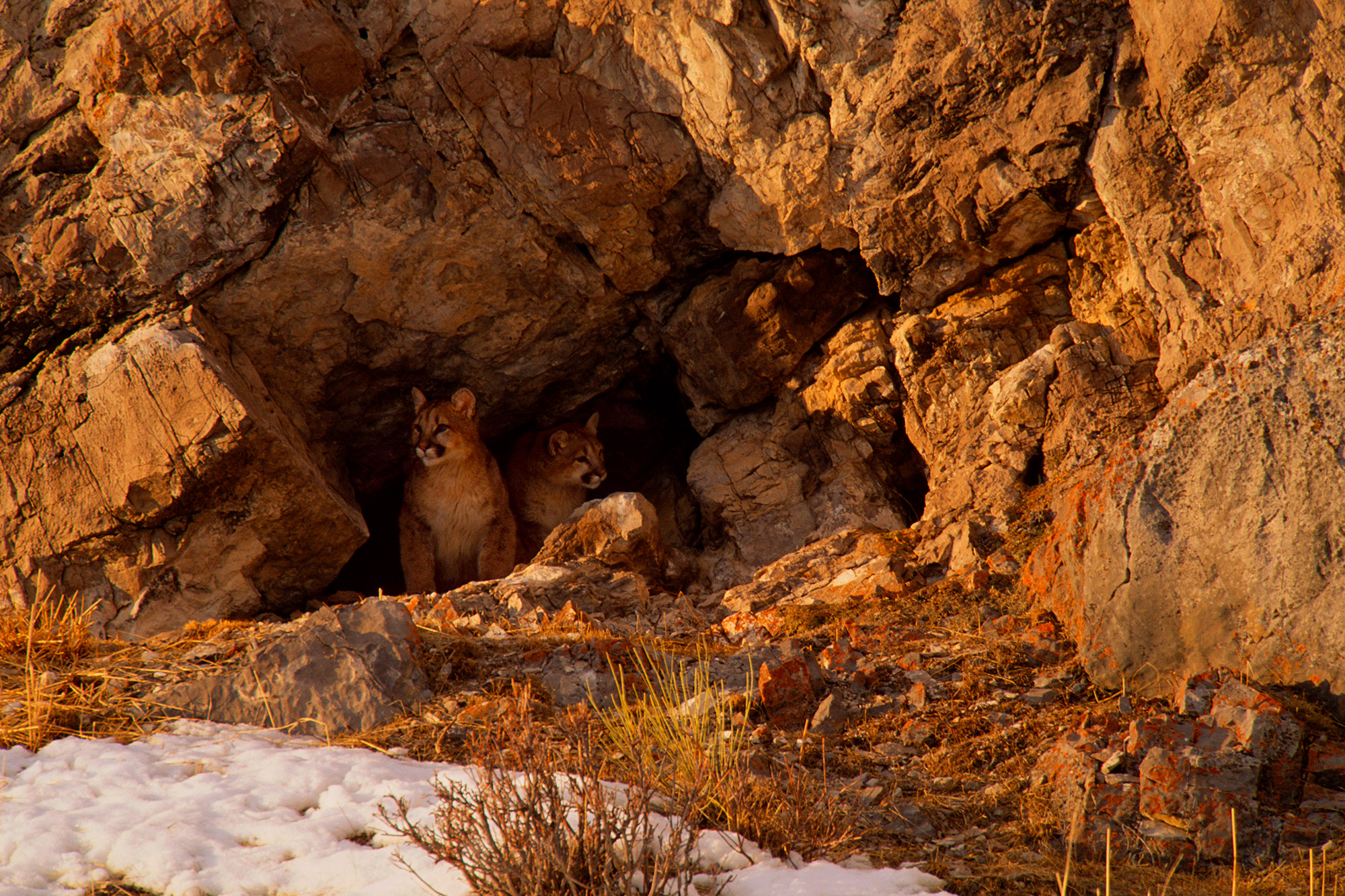
Still a year away from striking out on their own, two mountain lion cubs take up part-time residence in a cave adjacent to their principal den site on the National Elk Refuge in Jackson Hole, Wyoming.
We shared how wide-ranging cougars once were and how they were nearly made extinct in North America. So what happened? Well, as we said, humans happened. Sadly, those pursuing Manifest Destiny did so with little knowledge about the tapestry of the natural world. Fear of large carnivores, a lust to profit from the meat and fur of wild prey and small mammals, and the introduction of slow, naive domestic stock labelled our great predator species as vermin, pests, and something terrible to be destroyed. However, it’s important to understand this history in context. Westward expansion occurred in a time of isolation and fear, without the medical care, food security, or ecological understanding we have today. People and predators were both navigating unfamiliar landscapes, and those early perceptions shaped wildlife policy for generations.
In the early twentieth century, the rapid destruction of prey species began to slow with the end of market hunting. But this shift placed even greater pressure on cougars and other large carnivores. As new regulations limited what hunters could kill, resentment toward lions grew, fueled by the belief that they were competition. Bounties and widespread killing followed, often framed as control or necessity, but functioning largely as retaliation. Mountain lion populations continued to decline, and extirpation became a very real possibility across their entire range.
Photo credits: Thomas D. Mangelsen; Tom’s photos show us some of the many animals that were once heavily targeted for removal, and still, like the lion, face widespread persecution today.
To find out more about the lion’s story in North America, visit the historical timeline on our website: https://cougarfund.org/about-the-cougar/historical-timeline/